Electrical Safety Tips Every Homeowner Needs to Know
Most homeowners don't think about their electrical system until something goes wrong. A flickering light gets ignored. An outlet feels warm but "seems fine." A breaker trips and gets reset without a second thought. Those small things? They're worth paying attention to.
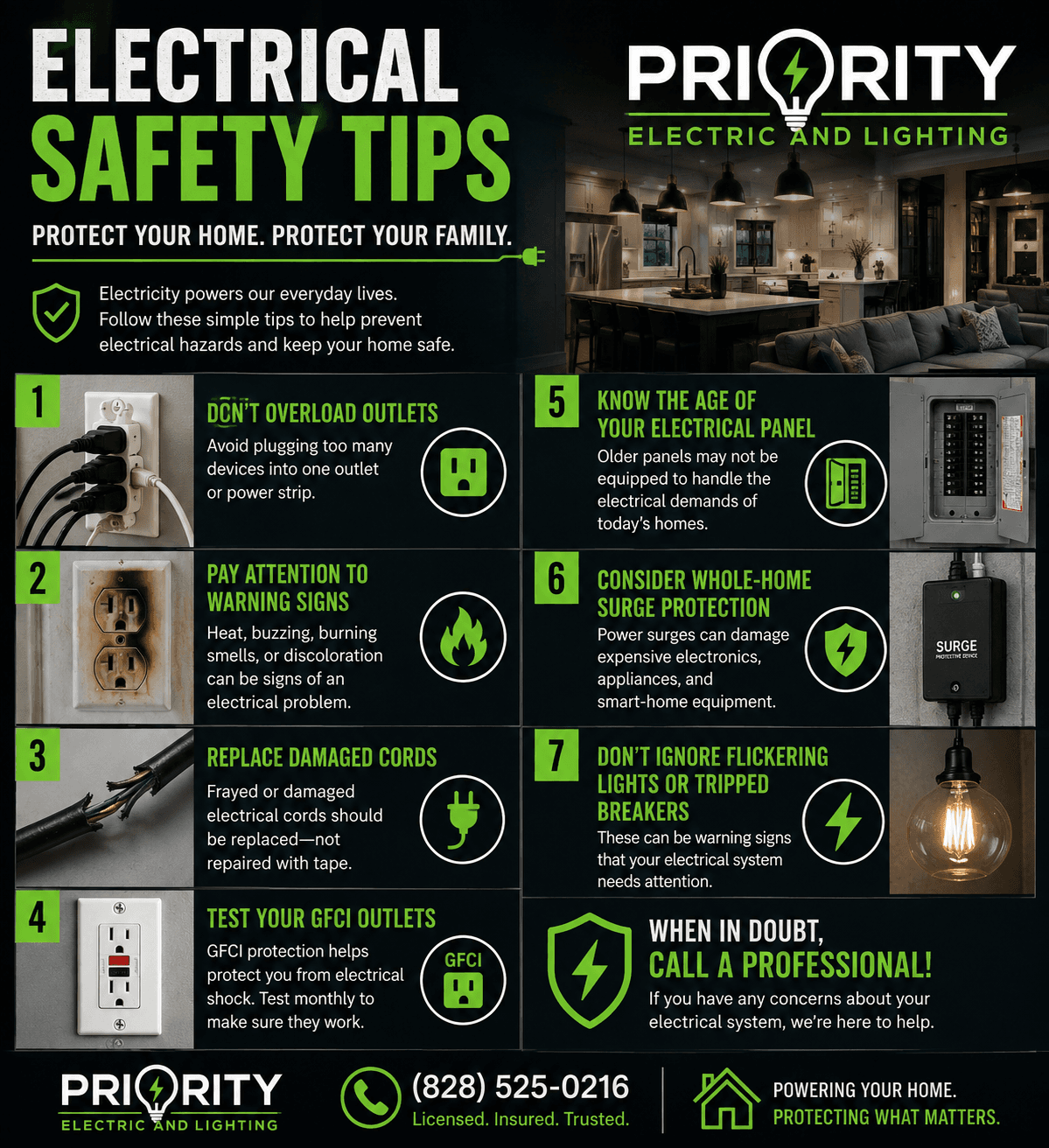
We put together a breakdown of seven electrical safety tips that every homeowner should keep in mind. None of these are complicated, but they do make a real difference. Don't overload your outlets or power strips. Pay attention to warning signs like heat, buzzing, or discoloration near outlets. Replace damaged cords - tape is not a fix.
Two things that often get overlooked: GFCI outlets and panel age. GFCI outlets should be tested monthly - they're your first line of defense against electrical shock in kitchens, bathrooms, and outdoor areas. And if you don't know how old your electrical panel is, it's worth finding out. Older panels weren't built to handle the load that today's homes put on them.
Whole-home surge protection is another one we always bring up. Power surges can wipe out TVs, appliances, smart-home devices, and anything else plugged in - and most people don't realize standard power strips offer very limited protection. A whole-home surge protection device works at the panel level and covers everything in the house at once.
The bottom line is this: your electrical system is something you live with every single day. A little awareness goes a long way. And when something doesn't look or feel right, it's always better to have a qualified electrician take a look before a small issue becomes a big one. We're here for exactly that.