Lights Out but the Breaker Isn’t Tripped? Here’s What It Means
Some of your home’s lights are out but no breakers are tripped? Learn the most common causes, safe DIY checks, and when it’s time to call an electrician.
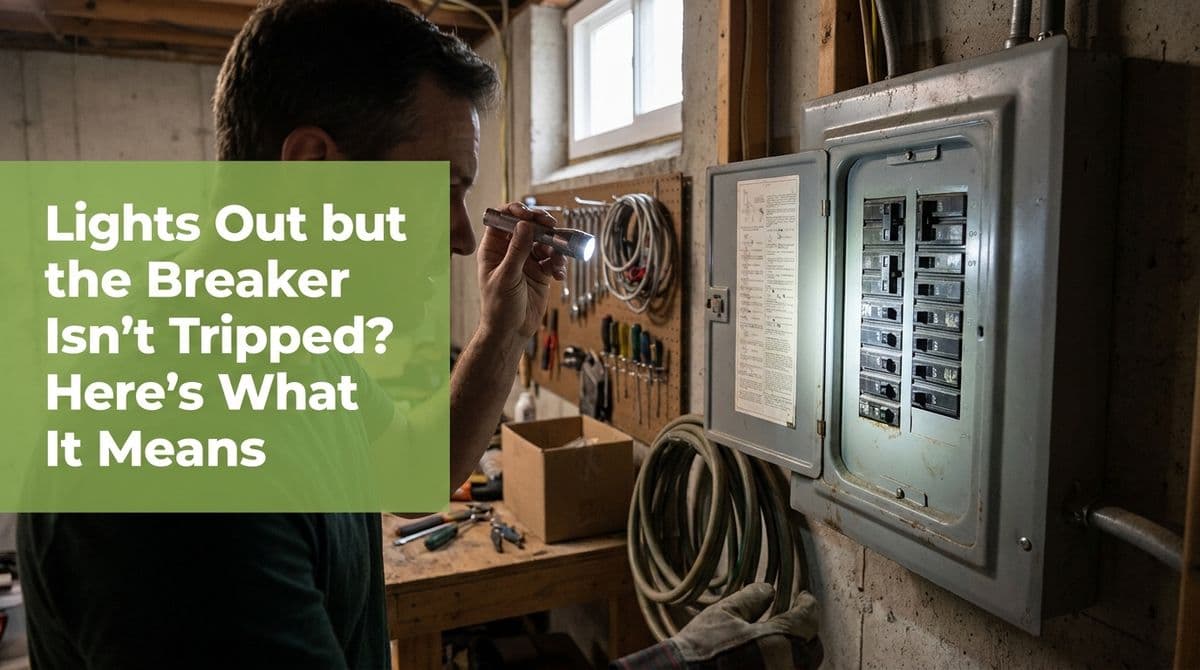
Why Are Some Lights Out If the Breaker Isn’t Tripped?
We recently got a call from a homeowner — let’s call him Mark — who lives just outside of town. Mark told us a few sections of lights in his home had been out for weeks. He’d checked his breaker panel multiple times, nothing was tripped, and he was convinced it had to be “some kind of blown fuse or something,” but he couldn’t find anything obvious.
By the time he called us, he was pretty sure it was “something I can’t do” and wanted to get on our schedule. That’s a very common situation: part of the house is dark, the panel looks normal, and it’s not clear what’s going on.
Let’s walk through the most common reasons some lights go out even when the breaker isn’t tripped, what you can safely check yourself, and when it’s time to call an electrician.
Start With the Simple Stuff: Bulbs, Switches, and Fixtures
When we go on a troubleshooting call like Mark’s, we always start with the basics. You can do the same:
- Check the bulbs – It sounds obvious, but multiple burned-out bulbs on the same circuit can look like a bigger problem. Try a brand-new bulb you know works in another fixture.
- Test the light switch – Some switches wear out or even break internally. If the switch feels loose, crackly, or hot, that’s a red flag. Don’t keep using a hot switch.
- Look at the fixture itself – Older fixtures can have loose internal connections or worn-out sockets. If other lights on the same circuit work but one fixture is dead, the fixture may simply need repair or replacement.
If you go through these steps and several fixtures are out, especially in different rooms, then you’re likely dealing with a wiring or circuit issue rather than just a bad bulb or switch.
Hidden Culprit: A Loose Connection on the Circuit
In many homes we visit for “mystery” light problems, the cause is a loose wire connection somewhere on the affected circuit. This can happen in:
- Light fixtures
- Switch boxes
- Outlet (receptacle) boxes that share the same circuit
- Junction boxes hidden in attics, basements, or crawlspaces
When a connection gets loose, you might notice:
- Some lights out all the time
- Lights that flicker when you use another device or switch
- Lights that work sometimes and then randomly stop
This is where we draw a firm line: opening boxes and working on wiring should be left to a licensed electrician. A loose neutral or hot connection can create heat and arcing, which is both a reliability and a fire safety issue. With Mark’s call, his description of “a few sections of lights out for weeks” told us that a loose connection or failed device on the circuit was very likely.
Could It Still Be a Breaker Problem?
Mark mentioned he’d checked his breakers and didn’t see anything tripped. That’s great first-step troubleshooting. But here’s what many homeowners don’t realize: a breaker can be partially failed or have a poor connection without the handle clearly flipping to “OFF.”
Some possibilities include:
- Weak or failing breaker – Internally damaged breakers may not carry full load or may “drop out” intermittently without looking tripped.
- Loose breaker in the panel – If the breaker isn’t firmly seated on the bus bar, you can get partial or no power on that circuit.
- Damaged bus bar – In older or overloaded panels, the metal bus that feeds the breakers can be burned or pitted near one or two breaker positions.
We never recommend homeowners remove the panel cover. But you can try one simple, safe check: firmly switch the suspect breaker fully OFF, then back ON. If the lights come back, you may have a breaker that’s starting to fail or that wasn’t fully engaged. If nothing changes, that’s a sign to have the panel professionally inspected.
Other Common Causes: GFCIs, Switch Loops, and Half-Hot Outlets
Another thing we often see on calls like Mark’s is a tripped GFCI hiding somewhere. A GFCI outlet that protects part of the circuit might be in:
- Bathrooms
- Garage
- Basement
- Exterior outlets
- Laundry or utility rooms
If that GFCI trips, it can kill power to multiple lights or outlets downstream, even in rooms that seem unrelated. Press the RESET button on any GFCIs you find and see if that restores power.
We also run into older wiring setups where:
- A switch loop or multi-way switch is wired in a non-standard way, causing parts of the circuit to lose power if one device fails.
- A half-hot outlet (controlled by a switch) is feeding lights, and either the outlet or the switch has failed, leaving some fixtures dead.
These issues can be tricky to trace without experience and a meter, which is why many homeowners, like Mark, decide it’s “something I can’t do” and schedule a service call.
When It’s Time to Call an Electrician
Here are some clear signs you should bring in a professional:
- Multiple lights or rooms are out and bulbs/switches check out fine
- You notice flickering, buzzing, or warmth at switches or fixtures
- Outages are intermittent or tied to using other devices
- Pressing GFCI reset buttons doesn’t restore power
- You’ve reset the relevant breaker and nothing changes
On Mark’s call, we explained our service call structure and scheduled a visit so a licensed electrician could safely open up the affected boxes, test the circuit, and track down the fault. That’s usually the fastest, safest way to restore power and make sure there’s no hidden fire hazard in the walls.
How to Get the Most Out of a Service Call
If you’re in a similar situation, a few quick steps before we arrive can help us diagnose faster (and often save you money):
- Make a list of all lights and outlets that aren’t working.
- Note when the problem started and if it followed any work, storm, or renovation.
- Let us know if the lights ever come back on temporarily or if they’re out 100% of the time.
We’ll take it from there with proper test equipment, safe work practices, and repair options that fit your home and budget.
If some of your home’s lights are out but the breaker doesn’t seem tripped, don’t ignore it for weeks. It might be something simple — or it might be an early warning sign of a more serious electrical issue. Either way, we’re here to help you sort it out safely.