Do I Need a Permit for Hot Tub Electrical Work?
Unsure if you need a permit for a hot tub shutoff switch or new spa wiring? Learn when permits are required, what code demands, and how to keep your tub safe.
Do I Really Need a Permit for a Hot Tub Switch?
We recently got a call from a homeowner — let’s call her Lisa — who had just installed a new hot tub. The tub itself was wired correctly and controlled from the main breaker panel inside the house, but Lisa really wanted an on/off shutoff switch right by the hot tub so she didn’t have to run inside every time she wanted to power it down.
Her original plan was to have a handyman install the shutoff. Then she started wondering, “Does this need a permit? And if it does, am I asking for trouble by skipping it?” That’s when she called us back and asked us to handle it — permits and all.
We walk homeowners through this exact question all the time. So let’s break down when you need a permit, why it matters, and how to handle shutoff switches and safety the right way for your hot tub.
Why Hot Tub Electrical Is Different from Other Projects
Any time you’re mixing water, people, and electricity, the electrical code gets a lot more strict — and for good reason. A hot tub circuit deals with:
- High amperage (often 40–60 amps for a standard spa)
- Continuous load while the tub is heating and circulating
- Wet, outdoor environments where people are barefoot and in contact with water
Because of that, the National Electrical Code (NEC) and most local building departments treat hot tubs like pools: they require proper grounding, bonding, GFCI protection, and a nearby disconnect (shutoff) that meets very specific rules.
In most areas we work in, any new hot tub circuit, panel change, or added shutoff switch will require a permit and inspection. That includes doing exactly what Lisa wanted: adding an external disconnect instead of relying only on the main breaker inside the house.
When You Need a Permit for Hot Tub Electrical Work
Every city and county has its own rules, but here’s a good general guide to when you almost always need a permit:
- Running a new circuit from your panel to feed a hot tub
- Adding or moving a hot tub disconnect/shutoff switch
- Upgrading your main panel to handle the added load of a spa
- Converting from a 120V plug-in spa to a 240V hardwired spa
- Changing wiring methods outdoors (e.g., adding conduit, junction boxes, or underground cable)
There are a few limited situations where a permit might not be required, such as replacing a like-for-like GFCI breaker or swapping out a damaged cover. But once you’re modifying the wiring or adding a device like a shutoff switch, most jurisdictions will treat that as permitted work.
Local Variations You Should Know About
We see three main patterns in how local inspectors handle hot tub electrical:
- Strict jurisdictions: Require a permit for any hot tub-related electrical work, including moving an existing disconnect a few feet.
- Moderate jurisdictions: Require permits for new circuits, new disconnects, or panel upgrades, but sometimes allow minor repairs without one.
- Lenient jurisdictions: May not require a separate permit for small changes if they’re under a certain dollar amount or scope, but still expect full code compliance.
Our approach is simple: we call the building department if there’s any doubt. Permits are far cheaper and less stressful than fixing a denied home sale or a failed insurance claim later.
What the Code Says About Hot Tub Shutoff Switches
Lisa’s main concern was the shutoff: “Isn’t it fine if I just turn it off at the breaker inside?” From a pure function standpoint, yes — that does kill the power. But code typically requires a “readily accessible disconnecting means” within sight of the hot tub, and that usually means:
- Visible from the hot tub (within line of sight)
- Located a safe distance away (often at least 5 feet, to keep you from operating it while touching the water)
- Rated correctly for the circuit (amp rating, enclosure type, etc.)
- Weatherproof and installed to outdoor code requirements
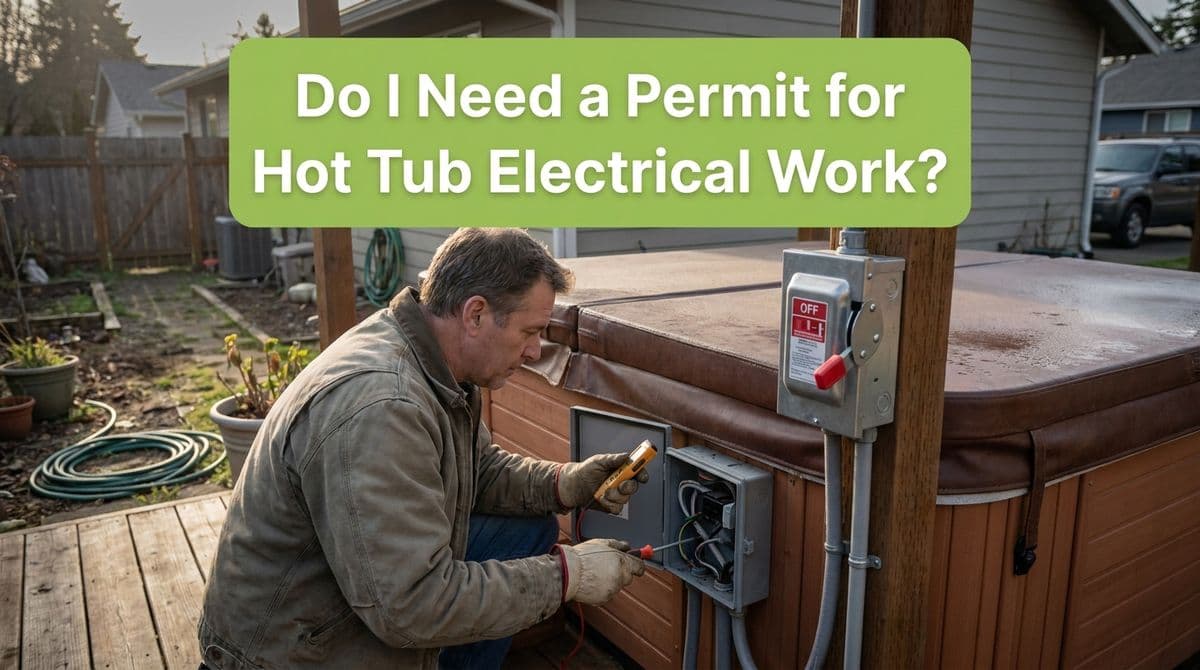
In practical terms, that usually looks like a small gray disconnect box on the exterior wall, a few feet away from the tub, with proper conduit and GFCI protection tied into your panel.
Handyman vs. Licensed Electrician: Cost and Risk
Lisa’s original plan was to save a little money by hiring a handyman. Once she started thinking about permits and safety, she realized that might not be the best way to go. Here’s how we talk through the trade-offs with homeowners:
Upfront Cost
- Handyman: May be cheaper initially, but typically cannot pull electrical permits. You may end up hiring an electrician later to fix or legitimize the work.
- Licensed electrician: Slightly higher upfront cost, but we pull the permit, schedule inspections, and make sure everything passes.
Long-Term Risk vs. Peace of Mind
- With no permit: You risk failing a home inspection when you sell, voiding parts of your homeowner’s insurance, or being forced to redo work after an accident or fire.
- With a permit: Your installation is documented, inspected, and certified by the city or county. That’s a big plus for safety, resale, and insurance.
For something as high-stakes as a hot tub circuit, we always recommend doing it once, doing it right, and doing it with a permit.
Common Hot Tub Electrical Questions We Hear
Do inflatable plug-in spas need permits?
Most 120V plug-in inflatable spas that simply plug into an existing outdoor GFCI receptacle do not require a new electrical permit by themselves. However, you still need to make sure:
- The outlet is GFCI-protected and weather-resistant
- The circuit isn’t overloaded by other large loads
- The cord routing follows manufacturer and code guidelines
If we have to add a new outdoor receptacle or run a dedicated circuit for that plug-in spa, that work usually does require a permit.
What if my hot tub is on a deck?
Deck installations bring two extra considerations:
- Structural: The deck must be rated to handle the full weight of the tub, water, and people. Your building department may require a separate building permit for the deck itself.
- Electrical routing: Wiring under or through a deck has to be protected from damage, properly supported, and accessible for inspection.
We coordinate with deck contractors and inspectors all the time to make sure the electrical and structural permits line up so you don’t get caught in the middle.
Can I move or replace an existing disconnect without a permit?
In many areas, moving a disconnect even a few feet is considered new work and does require a permit. Replacing a damaged disconnect with the same type, in the same location, sometimes falls into a “repair” category — but that still has to meet current code, not the code that was in place 20 years ago.
Our rule of thumb: if we’re touching the wiring, we assume a permit is needed unless the building department specifically says otherwise.
How We Handle Hot Tub Permits and Inspections
When homeowners like Lisa call us, we take the bureaucracy off their plate. Our typical process looks like this:
- On-site visit and quote: We check your panel capacity, tub specs, and ideal disconnect location.
- Permit application: We submit the electrical permit and any required drawings to your local building department.
- Professional installation: We install the circuit, shutoff, and GFCI protection to NEC and local code.
- Inspection: We coordinate the inspection and address any inspector comments if they arise.
When we were done with Lisa’s project, she not only had a convenient shutoff right by her hot tub, she also had paperwork showing it was done to code and inspected. That’s the kind of peace of mind we want every homeowner to have.
Thinking About Adding or Modifying a Hot Tub Circuit?
If you’re wondering whether you need a permit for a hot tub shutoff switch or new spa circuit, the safest assumption is: yes, you probably do. Between the high amperage, wet environment, and insurance implications, hot tub electrical is not the place to cut corners.
Have questions about your specific setup? We’re always happy to take a look, check your local requirements, and give you a clear plan — permits, shutoff switch, safety, and all.