Whole-House Electrical Inspections & Smart Upgrades
Wondering what a whole-house electrical safety inspection includes? Learn when you need one and how to pair it with outlet upgrades and smart switches.
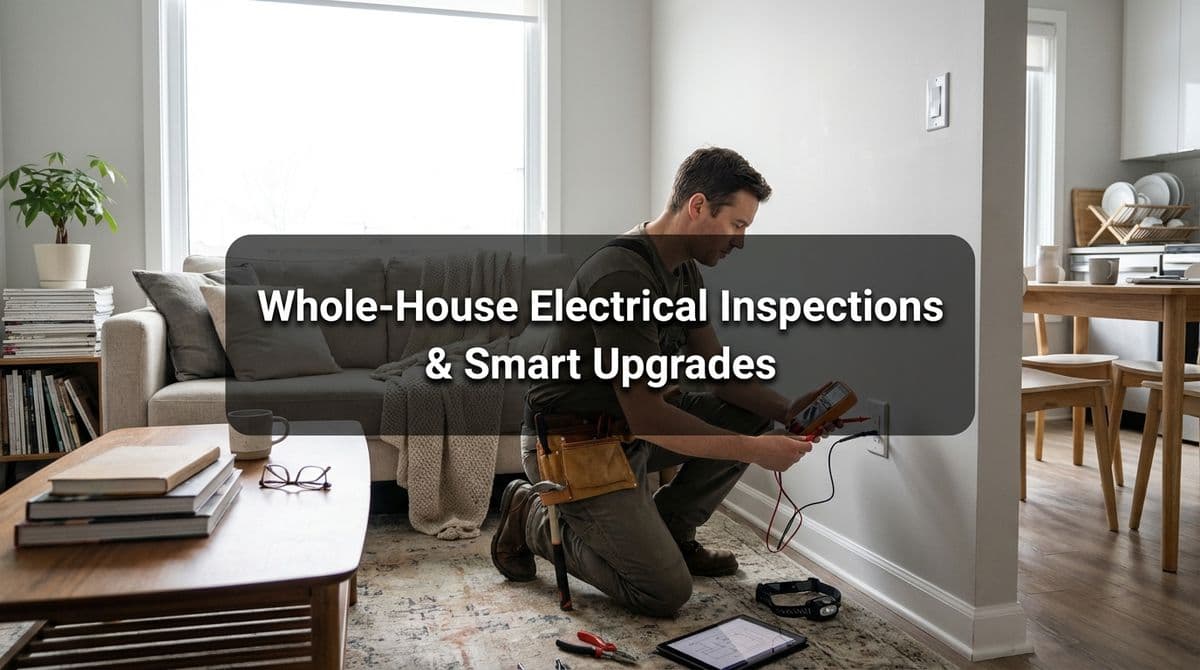
Why This Homeowner Asked for a Whole-House Electrical Check
We recently got a call from a homeowner’s assistant — let’s call her Sara — who was helping manage a house that was getting some general work done. As she put it, they wanted a “whole house electrical check,” and on top of that, a few outlets weren’t working, they needed some new outlets added, and they were interested in adding smart switches.
They already had a handyman on-site and were wondering if we could swing by the same week to look everything over. We had to explain that we schedule full-home electrical inspections a bit in advance, but we could be there the next week while they still had someone at the house to walk us through the issues.
That call raised a few good questions we hear a lot:
- What exactly is a whole-house electrical safety inspection?
- When do you really need one?
- Is it smart to combine it with outlet upgrades and smart switches?
In this post, we’ll walk through how we answer those questions during visits like the one we scheduled for Sara.
What a Whole-House Electrical Safety Inspection Includes
When someone asks us for a “full electrical check,” we explain that we’re looking at three big categories: safety, capacity, and convenience. Here’s what that typically covers.
Panel and Service Inspection
We always start at the heart of the system — your electrical panel and main service.
- Panel condition: We open the panel, check for rust, heat damage, loose connections, and improper wiring.
- Breaker sizing: We confirm breakers are correctly sized for the circuits they protect.
- Labeling: We see if your circuits are clearly labeled (this can save a lot of hassle later).
- Main grounding and bonding: We verify your system is properly grounded and bonded to help protect against shocks and surges.
With Sara’s homeowner, part of the concern was, “Is everything safe before we add more outlets and smart devices?” The panel is where we start answering that question.
Circuits, Outlets, and Switches
Because they already had non-working outlets, we knew we’d be doing a lot of circuit-level troubleshooting. During an inspection, we typically:
- Test outlets for power, correct wiring, and proper grounding.
- Look for loose connections, backstabbed wires, or damaged devices.
- Check GFCI protection in kitchens, bathrooms, garages, outdoor areas, and basements.
- Verify AFCI protection where required for modern safety standards.
Any time outlets aren’t working, we want to know why before we just swap them out. It might be a bad outlet, but it might also be a loose connection upstream, a tripped GFCI, or an overloaded or damaged circuit.
Lighting, Smart Devices, and General Condition
Since this homeowner was interested in smart switches, we also planned to look at the existing lighting circuits to see what would work best. During an inspection, we also:
- Check switch boxes for space (smart switches are bulkier and need room).
- Confirm whether neutral wires are available (many smart switches require a neutral).
- Look for outdated or unsafe fixtures and wiring (like brittle insulation or open splices).
- Note any obvious code violations or safety hazards.
We document what we find so the homeowner can decide what to tackle right away and what to plan for later.
When You Really Need a Whole-House Electrical Inspection
Sara’s situation is a good example: they had multiple electrical concerns at once — dead outlets, a desire for more outlets, and an interest in smart upgrades. That’s exactly when a full inspection makes sense.
Here are common times we recommend a whole-house electrical safety inspection:
- Before or right after buying a home — especially if it’s older or has had DIY work.
- When outlets or lights stop working, or you have frequent breaker trips.
- Before adding high-demand appliances like hot tubs, EV chargers, or large HVAC upgrades.
- During major remodeling, when walls are open and access is easier.
- Every few years on older homes, just as a safety and peace-of-mind check.
If you’re already scheduling us to come out — like in Sara’s case — it usually costs less and causes less disruption to do a full inspection and price everything together instead of piecemeal visits.
Combining an Inspection With Outlet Upgrades
One of the first things Sara mentioned was that some outlets weren’t working and they wanted to add additional outlets in a few spots. That’s a perfect example of how we bundle work during an inspection.
Fixing Non-Working Outlets the Right Way
During our visit, we would trace the problem outlets back through the circuit to find the root cause. Depending on what we find, solutions might include:
- Replacing worn or damaged outlets.
- Correcting loose or backstabbed connections in junction boxes.
- Resetting or replacing tripped/faulty GFCI devices.
- Repairing damaged wiring or correcting overloaded circuits.
We never recommend just “swapping the outlet” without understanding the cause of the failure. The inspection gives us that big-picture view.
Adding New Outlets Safely and to Code
When adding new outlets, we look at:
- Existing circuit load: Can an existing circuit handle another outlet?
- Code spacing rules: Making sure spacing and height make sense and meet modern standards.
- Specialty outlets: GFCI or tamper-resistant receptacles where required.
Because we’re already inside your panel and testing your circuits for the inspection, we can plan outlet additions that won’t push your system past its limits.
Planning Smart Switches During the Same Visit
Smart switches were the other big item on Sara’s list. We always explain that smart switches are easiest and cleanest to install when we’ve already done a full look at the wiring.
What We Check Before Installing Smart Switches
During the inspection, we verify:
- Neutral availability: Many smart switches need a neutral wire in the box.
- Box size: Smart devices are bulkier; the box must have enough cubic inches for all the wires.
- Three-way circuits: If the light is controlled from two locations, we design the smart setup accordingly.
- Wi-Fi and hub needs: We help you choose devices that fit how you want to control them (app, voice, schedules, etc.).
By combining the safety inspection with the smart upgrade planning, we can give you a clear estimate for both fixing existing issues and modernizing your switches in one shot.
Why Licensing, Insurance, and Scheduling Matter
Before we wrapped up the call, Sara asked a question we love to hear: “You’re licensed and insured, right?” We assured her we are, and that’s something every homeowner should verify before letting anyone touch their electrical system.
We also coordinated the visit time so either she or the handyman could meet us, walk us through the problem areas, and make decisions on the spot. Having someone there who knows the house and its priorities helps us tailor recommendations and pricing to what actually matters to you.
Thinking About a Whole-House Electrical Check?
If you’re in a similar situation — some outlets not working, thinking about adding more, or ready to upgrade to smart switches — a whole-house electrical safety inspection is often the most efficient first step.
We can come out, look everything over, diagnose existing issues, and design a plan that combines safety upgrades, outlet additions, and smart controls in a way that makes sense for your home and your budget.
You get peace of mind that your system is safe today and ready for the technology you want to add tomorrow.