Why Your Insurance Wants an Electrical Panel Inspection
Insurance companies are cracking down on electrical safety. Here’s why they’re asking for panel inspections now—and what we actually check as licensed electricians.
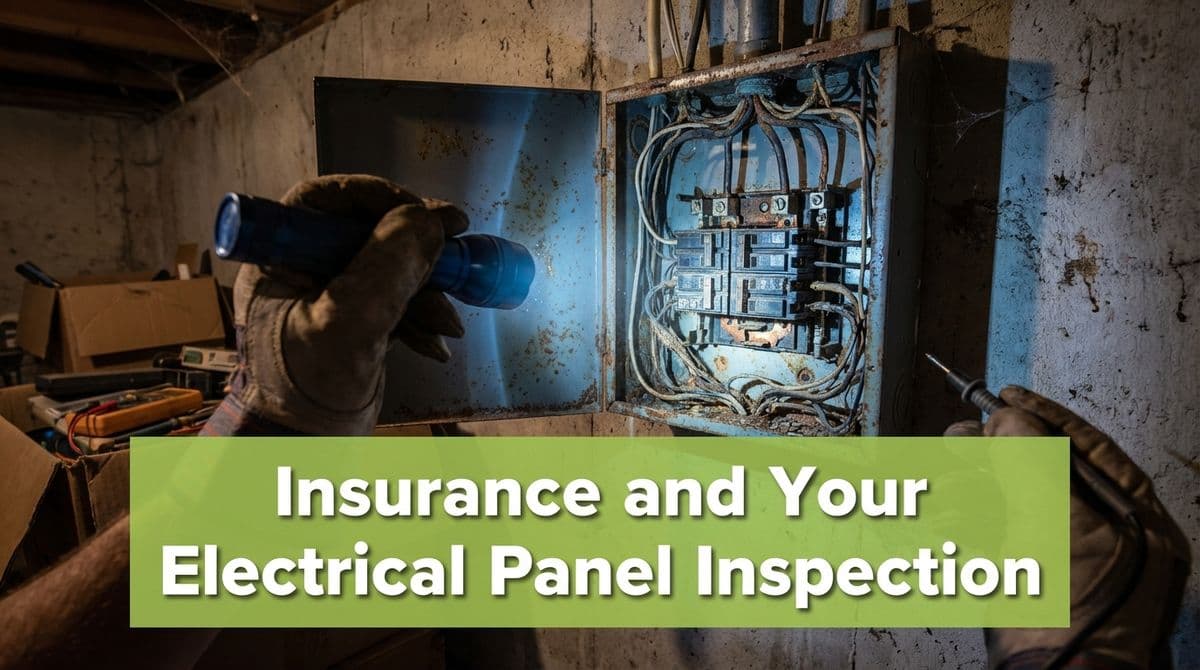
We recently got a call from a customer — let’s call him Kevin — who manages a 41-room commercial property. I picked up the phone, and Kevin jumped right in: his insurance company had suddenly decided they wanted all six of his electrical panels inspected.
They weren’t asking for repairs, just a written statement that the panels were safe, up to current electrical code, and not subject to any recalls. The panels were Square D, neatly labeled, tucked away in a locked storage room, and they’d never given him a bit of trouble. Kevin was frustrated: “We’ve never had an issue. Why are they getting so picky now? And what exactly are you going to look at?”
If you’ve gotten a similar request from your insurance company, you’re not alone. Let me walk you through what’s going on behind these inspections and what we actually do when we come out to check your electrical panels.
Why Insurance Companies Are Suddenly Asking for Panel Inspections
From our side of the phone, we’re hearing this more and more — especially from property managers, motel owners, and homeowners with older homes. Insurance carriers are tightening their requirements because:
- Electrical fires are a major claim source. Panels and breakers are the traffic control center for your entire electrical system. If something fails there, it can lead to overheating, arcing, and fires.
- Many properties still have older or recalled equipment. Certain panel brands and breaker types have a history of failures, and insurers know this.
- Codes and safety standards keep changing. What was acceptable 20–30 years ago might not meet today’s standards, especially in commercial settings.
So when Kevin’s insurance underwriter asked for documentation, they weren’t trying to make his life miserable. They wanted a licensed electrician to put eyes on the system and take responsibility for saying, in writing, “This looks safe,” or “Here’s what needs to be improved.”
What We Actually Check During an Electrical Panel Inspection
When we schedule this type of visit — whether it’s for a motel with six panels like Kevin’s or a single panel in a home — our inspection is systematic. Here’s what we typically look at.
1. Overall condition and installation
We start with the basics:
- Location and accessibility: Is the panel in a dry, accessible area, not blocked by storage or installed in a dangerous spot like a bathroom or closet full of combustibles?
- Enclosure and cover: Is the door intact, able to close properly, and free of rust, water damage, or physical abuse?
- Labeling: Like Kevin’s panels, we love seeing neat, accurate, laminated labels. We verify that breakers are clearly marked for what they control.
Insurers like to see that the system is organized and maintained — a tidy panel often points to a better-maintained building overall.
2. Panel brand, model, and recall status
Next, we identify the manufacturer and model number of the panel and breakers. In Kevin’s case, his panels were Square D, which is generally a reputable brand. But we still verify against current recall information.
Some panel brands and breaker types have a long history of problems and are frequently flagged by insurers, including:
- Certain Federal Pacific (FPE) Stab-Lok panels
- Some Zinsco / Sylvania panels
- Very old fuse panels still in service for modern loads
If we find one of these or another recalled product, we’ll note it in the report and typically recommend replacement, because many insurers simply won’t continue coverage with known hazardous equipment in place.
3. Wiring, terminations, and breaker sizing
After we confirm the panel type, we carefully remove the cover and check:
- Wire sizing vs. breaker size: The wire connected to each breaker must be appropriately sized; otherwise, the wire can overheat before the breaker trips.
- Loose or overheated connections: We look for discoloration, signs of arcing, or melted insulation around terminals.
- Double-lugged wires: Multiple wires under a single screw in a spot that’s rated for only one — a common code violation.
- Neatness and support: Conductors should be properly secured and not jammed or kinked.
This is where the difference between “It seems fine; the lights work” and “It’s actually safe” really shows up.
4. Code-related safety features
When Kevin asked what “meeting code” even meant, this is the kind of thing we were talking about. We check for:
- Proper grounding and bonding: Ground and neutral bars correctly separated where required; proper connection to the building’s grounding system.
- Panel fill and breaker type: No more breakers than the panel is rated for; correct breaker type listed for that panel model.
- Missing knockouts or open spaces: Any gaps in the cover must be closed with listed filler plates to prevent accidental contact.
We’re not just looking at whether the lights stay on; we’re asking, “If something goes wrong, will this system protect people and property the way it’s supposed to?”
What You Can Expect: Time, Cost, and the Final Report
On Kevin’s call, he was very clear: “I’m 99.9% sure there’s nothing to troubleshoot. I just need the inspection and a report for insurance. What’s that going to cost me?”
Every company prices a little differently, but here’s what you can generally expect from an inspection-focused visit like this:
- Time on site: For a typical home with one panel, plan on about 45–90 minutes. For a commercial property with multiple panels, it can take 1–3 hours, depending on access, labeling, and condition.
- Cost range: Many electricians bill this as service/troubleshooting time (we quoted Kevin our hourly rate), often in the $150–$300 per hour range locally. Multiple panels or complex systems may require additional time.
- Written report: After the visit, we prepare a summary that typically includes:
- Panel locations, brand, and model
- Noted defects or code concerns, if any
- Statement about apparent safety and any visible recalls
- Recommended corrections or upgrades
That written report is what your insurance carrier is really after — something from a licensed electrician they can put in their file.
How Often Should You Have Panels Inspected?
Most insurance companies only request a formal inspection when:
- You’re switching carriers or renewing a policy
- They know the building is older or has older equipment
- You’ve had a recent claim or electrical issue
From a safety standpoint, we typically recommend:
- Every 5–10 years for most homes and small businesses, if no issues are present
- Sooner if you add large electrical loads (new HVAC, EV chargers, hot tubs, commercial kitchen equipment, etc.)
- Immediately if you notice tripping breakers, burning smells, buzzing, or hot spots around the panel
Even if your insurance company isn’t asking yet, a quick panel check can catch small issues before they become expensive emergencies.
What You Can Do Before Your Inspection
If you’re in Kevin’s shoes and your carrier just sent you a checklist, here are a few ways to make the visit go smoothly:
- Clear access: Make sure we can easily get to every panel — no boxes stacked in front, no blocked doors.
- Have your insurance email handy: Forward it to us ahead of time so we know exactly what wording or forms they want.
- Share any history you know: When the building was built, any major electrical work, or past issues.
That information helps us tailor the inspection and the written report to satisfy your underwriter the first time, instead of going back and forth.
Need an Electrical Panel Inspection for Insurance?
When Kevin called, he thought the inspection requirement was “a bunch of nonsense.” By the time we walked him through what we’d check and how it protects his property and guests, he saw it more as an opportunity to confirm that his system was in good shape — and to have documentation to prove it.
If your insurance company is asking for proof that your electrical panels are safe, up to current code, and free of recalls, we can help. We’ll come out, perform a thorough inspection, and provide the written documentation your carrier needs — and you’ll get the peace of mind that your system is truly protecting your property, not just keeping the lights on.