HOA Approval Guide for Home Standby Generators
Live in an HOA and want a standby generator? Learn exactly what most HOAs require and how we help you get fast approval without delays.
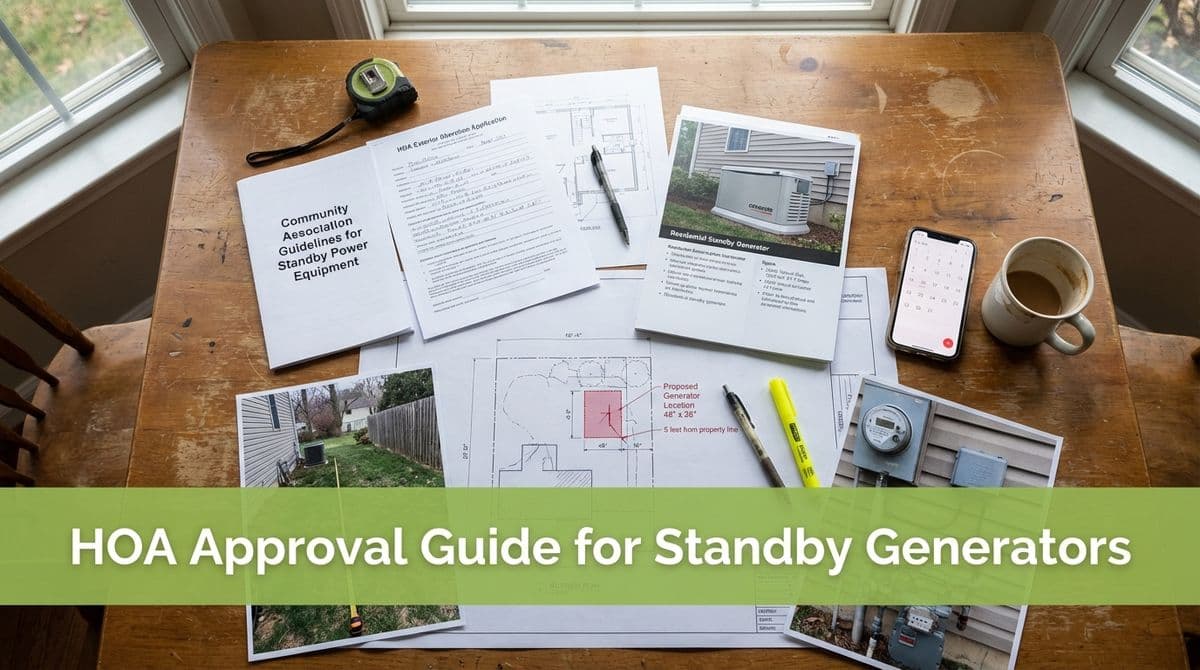
What Your HOA Really Wants Before Approving a Standby Generator
We recently got a call from a homeowner — let’s call him Tom — who had already put down a deposit on his home standby generator. He was excited to move forward, but his HOA had other ideas. Before we could schedule his install, the HOA came back with a list of requirements: pictures, measurements, decibel ratings, a plot plan, a material list, contractor info, and even possible screening with vinyl fencing.
Tom told us, “I’m ready for you to go, but the HOA needs all this information first.” That’s a situation we see all the time, and it’s exactly why we like to get ahead of HOA approvals before we put you on the schedule.
The Most Common HOA Requirements for Standby Generators
Most homeowners’ associations ask for very similar information. Here’s what we typically see and how we help you provide it.
1. Photos of the Generator
Your HOA usually wants to know what the unit will look like from the street and from your neighbor’s point of view.
We usually provide:
- Manufacturer photos of the exact model we’re installing
- Real photos of the unit in our shop or on a previous install (when appropriate)
- Angle shots that show front, side, and overall profile
If your HOA accepts email submissions, we can send these photos directly to them or to you so you can attach them to your application.
2. Dimensions & Placement
HOAs want to be sure the generator fits within your property lines and setbacks and doesn’t crowd your neighbor.
We’ll give you or your HOA:
- Exact dimensions of the generator (length, width, height)
- Required clearances from walls, windows, and property lines
- Proposed location based on safety, code, and HOA rules
We also help you choose a spot that balances noise, visibility, and service access so it works for both you and your HOA.
3. Decibel (Noise) Ratings
Noise is one of the biggest HOA concerns. In Tom’s case, he had already looked up the decibels himself, but the HOA still wanted documentation.
We provide:
- Manufacturer’s spec sheet with decibel rating at a set distance (usually 23 feet)
- Written explanation that the generator only runs at full volume during power outages and during a short weekly exercise cycle
- Optional mitigation options (placement, sound-reducing fencing, landscaping) if your HOA has strict noise limits
If you need something in writing to show your board or neighbors, we’ll put together a simple summary they can understand.
Paperwork HOAs Ask For (And How We Provide It)
Beyond pictures and noise information, most HOAs want to see how the project fits into the overall property and who’s doing the work.
4. Plot Plan or Site Plan
A plot plan shows your lot, house, property lines, and where the generator will sit. Some homeowners already have one from their builder; others need a fresh layout.
Here’s how we help:
- If you already have a plot plan, we’ll mark the proposed generator location on it for your HOA.
- If you don’t, we can either create a simple site sketch or guide you on where to get a copy from your builder or county records.
- We make sure the drawing clearly labels distances from property lines, windows, and doors, which HOAs often require.
5. Material List
Tom’s HOA also wanted a “material list” — another common request. They usually want to confirm that the installation will look finished and match the community’s standards.
We typically include:
- Generator brand and model
- Type of pad (concrete, composite, manufacturer’s pre-cast base)
- Conduit type and color (often painted to match the house)
- Gas piping type (if applicable)
- Any screening materials (vinyl fence, lattice, or shrubs, if required)
We can put this in a clean, written format you can forward straight to your HOA with your application.
6. Contractor Information
Nearly every HOA wants to know who’s doing the work and whether we’re licensed and insured.
We routinely provide:
- Our company name and contact information
- State license numbers for electrical (and gas, if applicable)
- Proof of liability and workers’ comp insurance, if requested
- Permit information once it’s pulled through the local jurisdiction
If your HOA prefers to talk directly to us, we’re happy to call them, as we did for Tom, and answer questions on your behalf.
Screening, Fencing, and Neighbor Concerns
Many HOAs include language about screening the generator with fencing or landscaping. Tom’s HOA, for example, mentioned vinyl fencing on three sides but hinted they might waive it if neighbors didn’t object.
Here’s how we usually approach that with you:
- Review the HOA rules with you so we understand exactly what they expect.
- Recommend practical screening options like vinyl panels, lattice, or plantings that don’t block airflow.
- Confirm clearances so any fence or shrubs stay within manufacturer and code requirements.
We can also provide photos or sketches of what the finished screened installation will look like, which often helps ease HOA and neighbor concerns.
How to Avoid HOA Delays on Your Generator Project
The fastest generator installs are the ones where HOA approval is handled early and thoroughly. Here are our top tips based on what we’ve seen work for homeowners like you.
1. Loop Us In Early
As soon as you know your HOA has rules around generators, send us their guidelines or architectural review form. We’ll:
- Review what they require
- Prepare the needed documentation
- Help you choose a compliant location before we finalize your proposal
This keeps you from submitting incomplete applications that get kicked back.
2. Let Us Communicate With the HOA (If You Prefer)
In Tom’s case, he asked us to reach out directly to the HOA’s management company. We’re happy to do the same for you.
We can:
- Call or email your HOA contact with technical details
- Send photos, spec sheets, and plans directly
- Clarify any confusing requirements and document approvals
You can stay in the loop while we handle the tedious back-and-forth.
3. Get Neighbor Buy-In
Some HOAs will bend on screening or placement if your immediate neighbors are supportive. We encourage you to:
- Share the generator’s noise rating and weekly test schedule
- Show them where it will sit on your property
- Explain how it benefits everyone during extended outages (fewer extension cords, safer operation than portable units)
A little communication up front can prevent objections that slow down approval.
Ready to Start Your HOA Approval for a Standby Generator?
If you’re in an HOA community and thinking about a standby generator, we can walk you through the approval process step by step. From photos and spec sheets to plot plans and contractor paperwork, we’ll help you gather everything your HOA needs so your project doesn’t get stuck in limbo.
When you’re ready, reach out to us with your HOA guidelines, and we’ll take it from there — so when the power goes out, you’re ready, and your HOA is happy.